HCMS-2973 matice 8 digit
Pokračování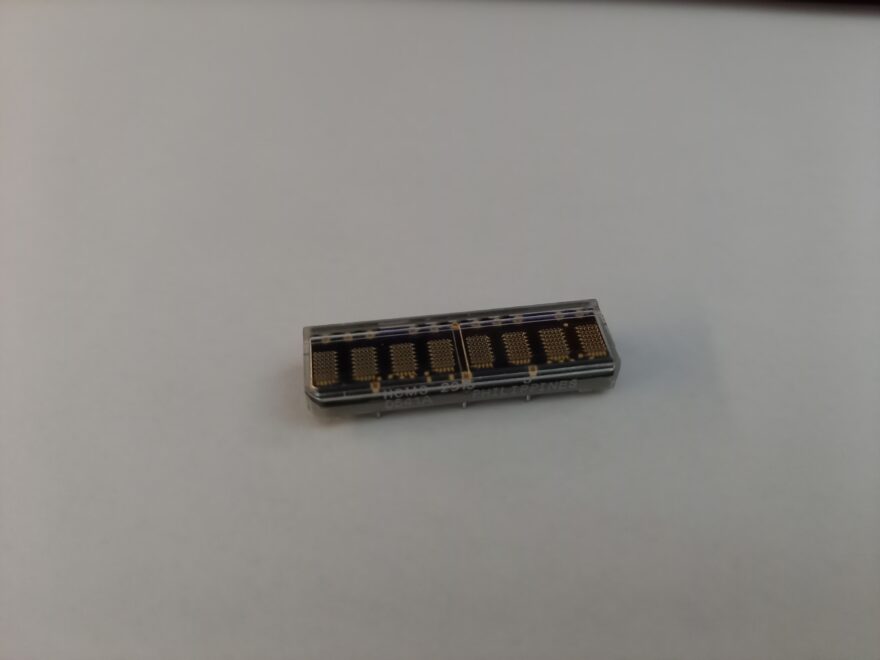
osobní stránky o všem možném
HCMS-2973 matice 8 digit
Pokračování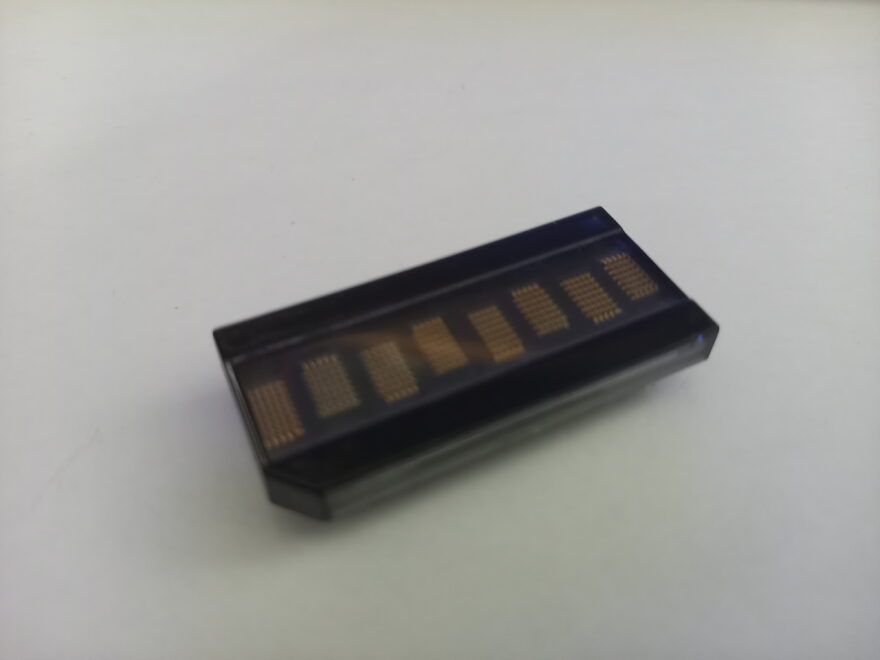
HDSP-2203 LED matice 8 míst
Pokračování
NSA 1198 7 segment 9 míst
Pokračování
Displays_HDSP_Raw is an advanced, non-blocking hardware-interrupted driver developed for vintage alphanumeric LED matrix displays, specifically the Broadcom / HP /
Pokračování
Displays_DL is a brand new, highly optimized library belonging to our display driver ecosystem. It brings full software integration for intelligent vintage alphanumeric LED matrix modules, specifically the Siemens / Osram / Litronix DL1416, DL2416, and DL2416T series. These legendary components from the late 80s and early 90s are famous for their unique built-in magnifying optics, brilliant retro aesthetic, and industrial look.
Pokračování
In this Phase we extend Part 2 by adding GPS power control and porting the I²C slave to TinyWireS (USI-TWI) on an ATtiny85. The ATtiny85:
• Parses NMEA GGA from a GPS module on D3/D4
• Presents itself as an I²C slave at address 0x42 on A4/A5
• On each master request, sends one register (0–9) of GPS data in little-endian
• Responds to register 9 write (0/1) to switch GPS power via D6 → MOSFET/NPN

In this phase we replace the JSON-over-USB link with a compact I²C interface. One Arduino (or ATtiny85) becomes an I²C slave that parses NMEA GGA; the master polls it once per second and prints human-readable output.
Pokračování
The goal is to end up with a tiny ATtiny85 “GPS-to-I²C” bridge that you can drop between any GPS antenna and any I²C-enabled host. It will parse raw NMEA (time, position, satellites) in hardware, present the results in simple binary registers over I²C, and (optionally) signal the host when a new fix is ready.
What you have now is Phase 1: a full Arduino prototype that reads NMEA from a GPS, parses out time/position/satellites, and emits it as JSON over USB-serial—paired with a browser page that plots your location on a map and a sky-view of satellites. This working demo is the foundation we will strip down and transplant into the final ATtiny85-based I²C bridge.

With this Arduino sketch and web page, you can stream live thermal data from the AMG8833 to any modern browser supporting the Web Serial API. By disabling the vertical flip in parseFrame(), the top row of your sensor data remains at the top of the heatmap. Feel free to customize color scales, add extrema markers, or log data to disk!
Pokračování
This project lets you control an Adafruit SI5351 clock generator directly from a web page running in your browser.
Pokračování
Monitoring ground vibrations—whether from microseismic events, volcanic tremor, or anthropogenic noise—typically requires expensive digitizers and software. Here we describe a
Pokračování
This compact ATTiny85 firmware continuously measures two NTC thermistors, maintains one hour of minute-by-minute history, computes both 60-minute and 10-minute temperature trends, and exposes all data in a 16-byte I²C response.
Pokračování
This project turns an ATtiny85 into a small, dedicated I²C-to-DFPlayer Mini interface (or “bridge”). An external I²C master (e.g. Arduino Uno) can send simple I²C commands to the ATtiny85, which then translates them into the DFPlayer’s 10-byte serial protocol. You get full control of play, pause, stop, next, volume up/down, and specific-track selection—without burdening the master with low-level serial timing.
Pokračování